
Mental health, detention &
human rights
- The Project
Looking beyond
the law on paper
SHIELD examines how the system operates in practice across different Italian regions, connecting legal norms with everyday institutional realities and the conditions that shape detention and care.
The project aims to identify structural risks, clarify systemic gaps and support more humane and legally compliant responses to mental health detention. Its findings are intended to be academically rigorous, practically relevant and useful to wider reform debates.
- Objectives
From legal norms to everyday practice.

Identify systemic gaps in mental health detention.

Assess how legal and institutional frameworks operate in practice.
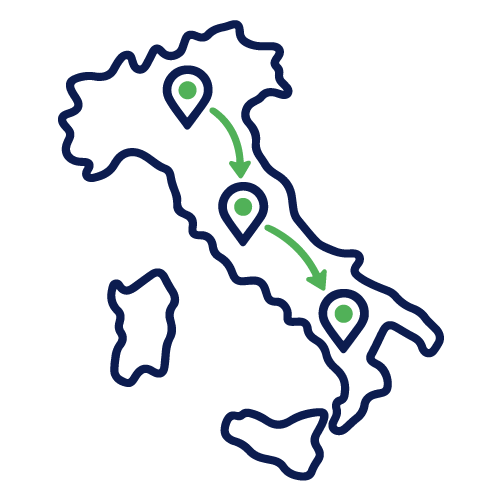
Compare regional patterns of implementation and reform.

Develop lessons that may be transferable to broader European discussions on rights and detention.
- Research context
Italy as a Case Study for Reform
Italy represents a particularly relevant context for examining institutional reform following the closure of judicial psychiatric hospitals and the development of REMS and community-based responses. This transition provides a valuable framework for analysing the interaction between legal reform, institutional structures and regional implementation.
Previous model
OPG
Ospedali Psichiatrici Giudiziari, the former judicial psychiatric hospital model.
Institutional change
Transition
A legal and institutional shift that reshaped responsibility, treatment and implementation.
Current landscape
REMS + community
Residences for the Execution of Security Measures and community-based models.
Why the project matters
People with mental health conditions in criminal justice systems may be exposed to structural risks linked to detention, access to care, legal uncertainty, and institutional fragmentation. SHIELD examines these problems in order to better understand how rights protections can be strengthened in practice.
- Research context
Methodological approach
The project combines legal analysis, institutional mapping, comparative regional assessment, and interdisciplinary dialogue. SHIELD’s aim is to connect legal norms with everyday practice and with the institutional conditions that shape detention and care.
01
Law
Evidence and legal analysis
02
Institutions
Institutional mapping
03
Practice
Comparative regional assessment
04
Rights
Interdisciplinary dialogue
Publications, conference presentations, project reports, recommendations and selected resources will be added as they become publicly available.
- Research & Outputs
Knowledge built progressively
- Research themes
- Outputs
- Resources
Materials forthcoming →
Materials forthcoming →
Materials forthcoming →
- Research themes
- Outputs
- Resources
Materials forthcoming →
Materials forthcoming →
Materials forthcoming →
- News & Events
An academic agenda, not a blog feed.
The section is prepared for workshops, Researchers’ Night activities, policy roundtables, research milestones, visiting activities and newly released outputs.
- News
- Events
Updates forthcoming →
SHIELD will share research milestones, workshops, public events, publications, and policy outputs as they become available.
Please check back soon
Updates forthcoming →
SHIELD will share research milestones, workshops, public events, publications, and policy outputs as they become available.
Please check back soon
Contact Us
- FAQs
A REMS (Residenza per l’Esecuzione delle Misure di Sicurezza) is a residential facility for people who have committed an offence but are considered not criminally responsible, or only partly responsible, because of a mental health condition. A court must also judge them to be socially dangerous. REMS replaced Italy’s former judicial psychiatric hospitals (OPG). They are run by regional health services rather than the prison administration. They are small, care-oriented facilities, and the law treats detention in them as a measure of last resort.
These are dedicated units inside prisons (Articolazioni per la Tutela della Salute Mentale, ATSM). They care for prisoners whose mental health conditions arise or worsen during imprisonment. They operate within the prison system, with clinical care provided by the regional health service. Combining custody and treatment in this way raises particular questions for human rights protection.
The research involves professionals who work in or with REMS and prison mental health units. This includes administrators, psychiatrists and psychologists, educators, nursing and support staff, prison staff, and legal professionals. Patients and detained people are not interviewed. Participation is voluntary and based on informed consent, and participants may withdraw at any time. Fieldwork is arranged in advance with the competent authorities to avoid disrupting the work of institutions.